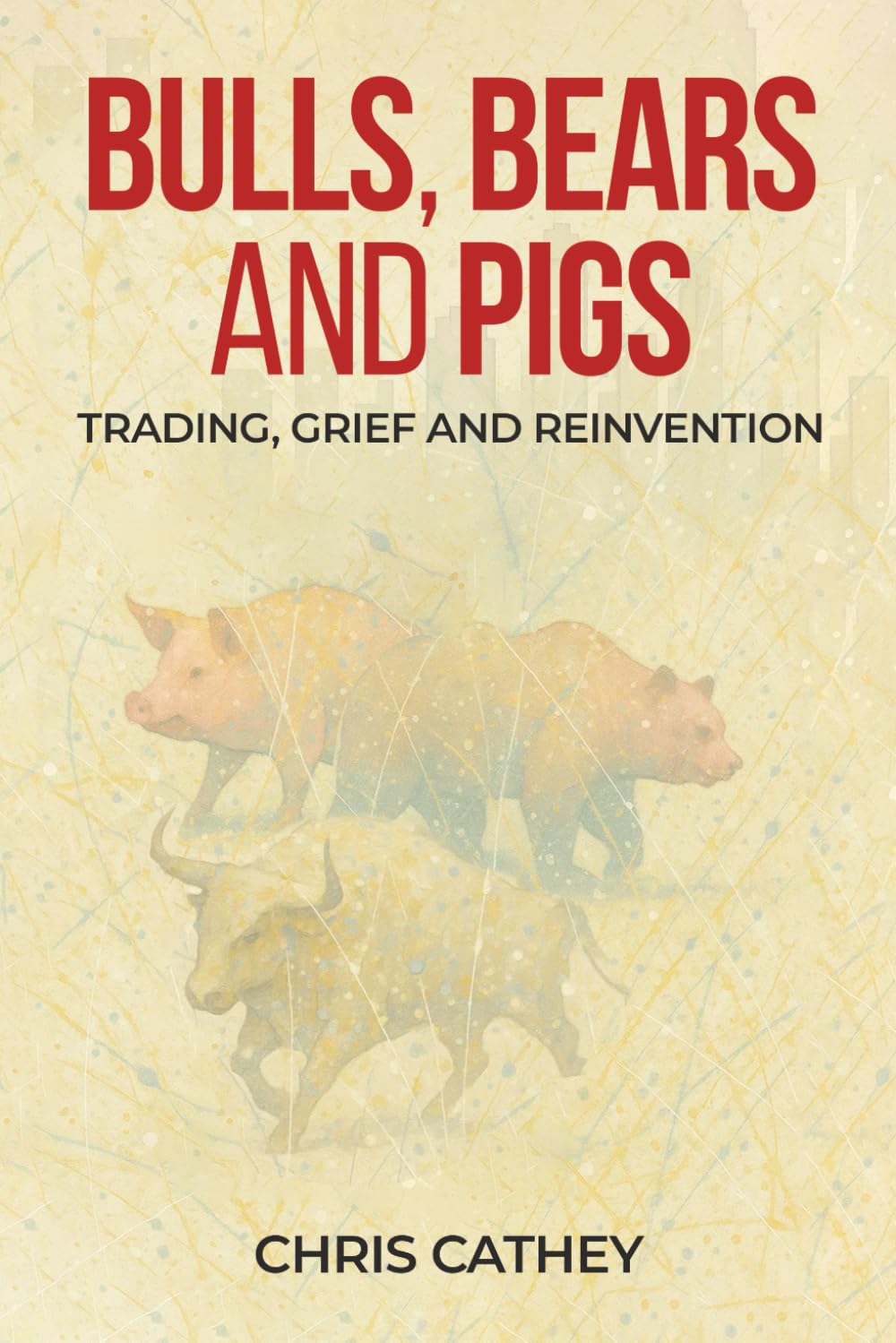
Bulls, Bears and Pigs is a book that stands out because it avoids the usual drama and exaggeration that often surround stories about finance. Instead of trying to impress the reader with big claims, the book focuses on the truth of one man’s experience. Chris Cathey writes about his rise from a working class childhood in Newcastle to a senior role at Goldman Sachs, but what makes the book meaningful is the direct and simple way he tells his story. It is not a book about money. It is a book about the reality of ambition, the impact of environment, and the way personal events can reshape a life.
One of the first things that readers will notice is how clearly Cathey describes the trading floor as it existed before technology took over. Many people today imagine that markets have always run through screens and silent systems. Cathey shows the opposite. He brings readers into a world built on human voices, quick judgment, and constant pressure. His descriptions of noise, movement, and daily routines give readers a strong sense of what it felt like to be in the centre of that world. Nothing is romanticised and nothing is softened. This makes the experience believable and easy to understand.
The book also highlights the contrast between Cathey’s upbringing and the environment he entered as a young trader. He writes openly about arriving in rooms where everyone seemed to come from a different background. He explains how unfamiliar he felt during his early years at Cambridge and then at Goldman Sachs. Yet instead of turning these moments into dramatic scenes, he focuses on what they taught him. He talks about listening carefully, preparing thoroughly, and keeping a level head even when others did not. These sections give the book a grounded sense of personal growth.
As the story moves forward, the tone shifts. Cathey writes about meeting his wife, Claire, and building a life with her. These parts of the book feel warm and sincere. He shares memories without trying to force emotion on the reader. Because of this, the later chapters are even more powerful. When Claire receives her breast cancer diagnosis, and later when she dies, the reader understands exactly what has been lost. Cathey does not dramatise the pain. He writes with honesty, which makes the loss feel real.
After this, the book turns toward resilience and responsibility. Cathey becomes a single father to four children and must rebuild a life that has been changed. He writes about leaving finance and returning to Newcastle to care for his family. These chapters show a different kind of strength, one that has nothing to do with trading or career ambition. It is the strength to keep going, to raise children, and to rediscover a sense of purpose.
What makes Bulls, Bears and Pigs a strong book is its balance between professional insight and personal experience. Readers learn how trading desks worked and how decisions were made in the years before digital systems. They also learn how a person manages life when everything familiar has fallen away. The writing is simple, clear, and honest throughout. Cathey never asks for sympathy and never tries to present himself as a hero. He just tells the truth about what happened, and that truth is compelling on its own.
This book will appeal to readers who want a real picture of the financial world, not the one shown in films. It will also resonate with anyone who has experienced loss or major change. Cathey’s story shows that success is not only about career advancement. It is also about what a person learns along the way and how they adapt when life takes an unexpected turn.
Bulls, Bears and Pigs is a book worth reading because it makes no attempt to be anything other than what it is. It is the life of one man told with clarity and sincerity. And that is enough to make a lasting impact.
Read this book now: https://www.amazon.com/dp/197122815X.